What if the Confederates won the Civil War?
A counterfactual analysis grounded in Civil War scholarship — showing why Confederate independence was economically fragile, why slavery faced long-term collapse even without Union victory, and why “Lost Cause” narratives misrepresent what Confederate victory would actually have meant.
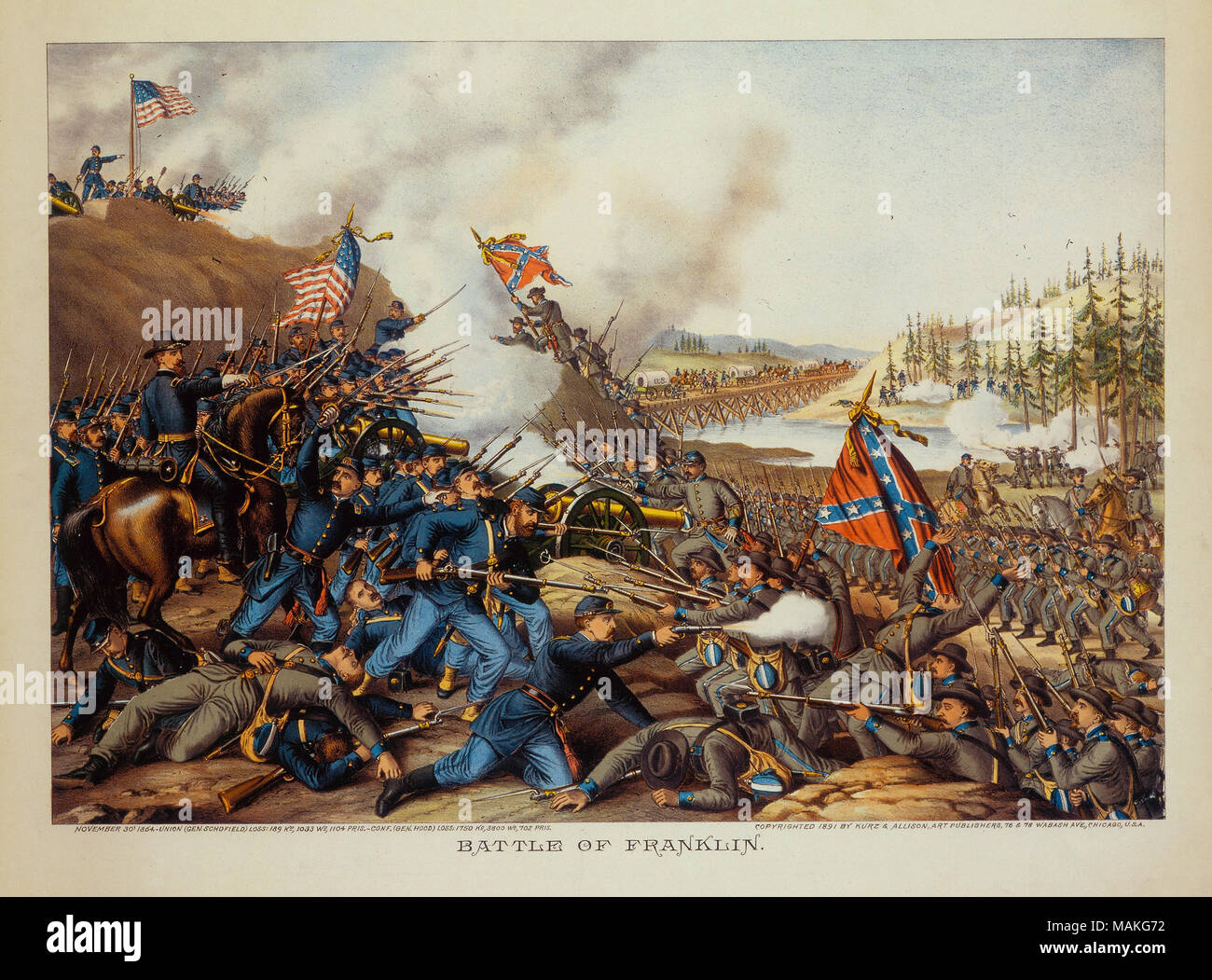
Separating the Counterfactual from the Mythology
No scenario in American alternate history has been more written about, more politically charged, or more distorted than the Confederate victory. The "Lost Cause" tradition — a post-war Southern mythology that reframed secession as a noble constitutional struggle rather than a defense of slavery — gave Confederate victory fantasies a particular ideological flavor. Much of the popular literature imagines a prosperous, stable Confederacy that proves the South's antebellum way of life was sustainable. Serious historical analysis points in the opposite direction.
A rigorous Confederate victory counterfactual has to grapple with several uncomfortable facts: that the Confederate economy was structurally fragile even before the war; that British intervention was far less likely than Southern leaders believed; that four million enslaved people were an active force in the conflict, not a passive variable; and that the Union's industrial and demographic superiority meant that military reversal required not just one Confederate victory but a sustained series of them combined with Northern political collapse. With those constraints in mind, here is what Confederate independence might actually have looked like.
The Point of Divergence: Gettysburg, and Why It Matters Less Than You Think
The most common divergence point for Confederate victory scenarios is the Battle of Gettysburg (July 1–3, 1863). In this alternate timeline, Pickett's Charge on Day 3 succeeds, the Union center breaks, and Lee's army captures Cemetery Ridge, routing Meade's forces and opening a path toward Washington. Combined with the simultaneous fall of Vicksburg (which in our timeline fell to Grant on July 4), a Confederate Gettysburg victory creates a crisis of confidence in the Lincoln administration severe enough to bring the Copperhead (anti-war Democrat) faction to power in the 1864 elections. A new administration negotiates Confederate independence in early 1865.
However, military historians consistently note that even a decisive Confederate victory at Gettysburg would not have ended the war quickly on its own. The Union had other armies. Grant, who won at Vicksburg regardless of Gettysburg, could have continued his campaign in the West. What Gettysburg could have changed was Northern political will — and that is the real lever. Lincoln's ability to sustain the war depended on his political survival through the 1864 election. A sufficiently catastrophic 1863 gives George McClellan, the Democratic nominee, enough ammunition to win that election on a peace platform. That is the true divergence: not the battle itself, but the political consequence of the battle on Northern domestic politics.
Would Britain Have Recognized the Confederacy?
Confederate diplomatic strategy rested on a calculation that proved wrong in the actual war: that British economic dependence on Southern cotton would force London to recognize the Confederacy and potentially break the Union naval blockade. This theory — "King Cotton diplomacy" — failed for reasons that matter greatly to the counterfactual.
British mills did suffer from the cotton shortage after 1861. But several factors prevented this from translating into government recognition. First, Britain had abolished slavery in its own empire in 1833, and British working-class public opinion — the very workers suffering from mill closures — was vocally abolitionist. The mill workers of Lancashire famously sent a message to Lincoln expressing solidarity with the Union despite their own economic pain. British politicians understood that recognizing a slave republic would be domestically toxic.
Second, Britain had developed alternative cotton sources in Egypt and India during the war years, reducing the strategic leverage of Southern cotton faster than Confederate planners anticipated. Third, Britain's long-term strategic interest was a balanced North America, not a powerful Confederacy — a strong Southern state would have been a destabilizing force on Britain's Canadian border.
In a Confederate victory scenario, British recognition becomes somewhat more plausible only if the Confederacy demonstrates clear viability as an independent state and if slavery becomes less visible as the defining issue — which, as we will see, it would not. Even then, Britain's most likely posture is commercial engagement without formal alliance: trading with the CSA while avoiding the military commitment that full recognition would imply.
Slavery's Economic Clock: Would It Have Survived Independence?
The most important question in the Confederate victory counterfactual is not military or diplomatic. It is economic. Could the slave-based cotton economy that the Confederacy was built to protect have survived as a viable long-term system?
The evidence strongly suggests it could not, for reasons that were already visible before the war began. Cotton prices had been declining since the 1840s as Egyptian and Indian production expanded under British encouragement. The slave economy was not static: it was already under pressure from the western frontier (slaveholders were pushing into Texas and wanted expansion into Cuba and Central America precisely because the older states were becoming less productive). The Confederate constitution explicitly protected slavery forever, but economic systems do not respect constitutional provisions.
Historians like Roger Ransom and Richard Sutch have argued that the slave economy, while profitable for individual planters, systematically retarded Southern industrial development by concentrating capital in human property rather than machinery, infrastructure, and education. An independent Confederacy would have faced this problem in an acute form. Without the Union's industrial support network, Southern manufacturing would have remained primitive. The railroad system — which was already inferior to the North's and deteriorated rapidly during the war — would have recovered slowly without the capital investment that Northern banks provided. The CSA's own wartime experience suggested its fiscal system was inherently unstable: Confederate inflation reached 9,000% by the end of the actual war.
The most likely trajectory is not eternal slavery but accelerating pressure on it from multiple directions: British commercial conditions on trade relationships (Britain would demand gradual emancipation as a condition of normalized relations), internal economic inefficiency, and the growing resistance of enslaved people themselves. The 1870s or 1880s probably see some form of nominally "gradual emancipation" that in practice resembles Brazilian-style peonage — legal freedom without economic freedom, maintained by debt, vagrancy laws, and violence. This is not "slavery ending naturally." It is slavery transforming into a different form of racial coercion while the human beings at its center continue to suffer.
The Four Million: Enslaved People as Historical Actors
Any Confederate victory analysis that treats enslaved people as passive background is missing the most important variable. During the actual Civil War, approximately 500,000 enslaved people escaped to Union lines, and roughly 180,000 Black men served in the Union Army. The war's momentum shifted in part because of this self-liberation movement, which accelerated after the Emancipation Proclamation made Union lines a legal pathway to freedom.
In a Confederate independence scenario, this dynamic does not simply stop. It transforms. An independent Confederacy sharing a long border with a Union that has no reason to cooperate with slave-catching is a structurally different containment problem than antebellum slavery. The Fugitive Slave Act depended on federal enforcement across the entire country. A sovereign Confederate state cannot compel a foreign (Union) government to return escaped people. The Underground Railroad, which was already active before the war, becomes a formal international corridor. Border states become flashpoints. The Underground Railroad stops being a covert network and starts resembling a humanitarian corridor backed by Union political sympathy.
Southern responses — increased surveillance, heavier penalties, potential militarization of the border — accelerate the political crisis within the Confederacy. The internal costs of maintaining slavery against organized resistance, international pressure, and economic decline mount throughout the 1870s and 1880s. The enslaved people of the South are not waiting for history to happen to them; they are making history.
The 20th Century Without an American Superpower
The most consequential long-term result of Confederate victory is what it does to the trajectory of American power. The United States that entered World War I in 1917 was a continental industrial giant with a population of 100 million, a unified economy producing more steel than Britain and Germany combined, and two decades of experience as a hemispheric power following the Spanish-American War. That country does not exist if the Civil War produces permanent division.
A divided North America in the late 19th and early 20th centuries means two mid-sized powers instead of one emerging superpower. The Union still industrializes and still has demographic growth — but it is also spending enormous resources on border defense, managing refugee flows, and potentially fighting a Second Civil War when revanchism eventually boils over. The Confederacy, struggling with economic transformation and racial conflict, is not a strong state.
When the crisis that becomes World War I arrives in 1914, neither American state has the capacity to be decisive. The Union might still enter on the Entente side, but without the Confederacy's manpower and without the industrial output of a united continental economy, American intervention does not tip the scales in 1917 the way it actually did. The war may grind on to a negotiated peace, or to a German-influenced outcome in the East, with consequences for 20th-century European politics that are difficult to overstate. No decisive Allied victory in 1918 likely means no Versailles Treaty, which means the specific sequence of grievances that produced Adolf Hitler's rise is broken or altered.
The Marshall Plan, NATO, the United Nations, the Bretton Woods financial system — all of these were products of American superpower status in 1945. Without a unified United States, the post-war world is shaped by different actors under different constraints. The Soviet Union, which in actual history was checked at every turn by American power and alliances, faces a weaker counterweight. The 20th century in this timeline is probably more violent, less prosperous, and less stable than the one that actually occurred — which is itself a sobering statement given what actually happened.
Internal Confederacy: States' Rights in Practice
One of the historical ironies of the Confederacy is that the principle it invoked to justify secession — states' rights against federal overreach — immediately created problems for its own war effort. Confederate President Jefferson Davis repeatedly clashed with state governors who refused to cooperate with conscription, taxation, and centralized military command. Governor Joseph Brown of Georgia and Governor Zebulon Vance of North Carolina were persistent obstacles to Confederate war planning. The Confederate constitution, which was designed to prevent federal dominance, made it structurally difficult to raise revenue or coordinate national policy.
These tensions do not disappear with independence. They intensify. A peacetime Confederacy trying to industrialize, manage the fiscal crisis left by the war, and maintain slavery against internal and external pressure would have found states' rights ideology a constant obstacle to the central coordination that economic development requires. Texas, with its long border and distinct culture, was already a potential secession risk. The border states of Kentucky and Missouri, which in our timeline the Confederacy claimed but never fully controlled, would be permanent flashpoints.
The Confederate vision of a stable, hierarchical agrarian republic was, even on its own terms, a fantasy. The structural forces of the 19th century — industrialization, urbanization, mass migration, international commerce — were incompatible with the social order the Confederacy existed to protect. Independence might have delayed the reckoning, but it would not have prevented it.
Historical Verdict: Independence Without Vindication
The Confederate victory counterfactual ultimately produces not a stable alternative America but a slower, more painful version of many of the same conflicts. Slavery ends, but later and through more suffering. The African American freedom struggle continues under different, probably harsher conditions. The United States, divided, fails to become the superpower that shaped the 20th century. The world that results is poorer, more violent, and less free — not because of Southern character, but because of the specific institution the Confederacy existed to defend.
What this counterfactual makes clear is that the Civil War was not, as the Lost Cause mythology insists, a conflict about constitutional abstractions. It was a conflict about whether four million human beings would be enslaved or free. The outcome of that conflict shaped everything that followed. Alternate histories that paper over this central fact — that treat Confederate independence as an interesting geopolitical rearrangement rather than a continuation of slavery's horror — are not really engaging with history. They are engaging with the mythology that the Confederacy built to justify itself, and that mythology has done enough damage already.
Explore This Scenario Interactively
The analysis above is our editorial interpretation. On Alternate History AI, you can trace your own Confederate independence timeline — choosing how the peace terms are structured, how slavery's economic pressures play out, and whether a second conflict eventually reunites the continent. Each decision produces a different simulated outcome.
Select an interactive scenario and start exploring →
References and Further Reading
- Wikipedia: American Civil War — comprehensive overview of causes, campaigns, and consequences
- Britannica: American Civil War — scholarly summary of the war and its legacy
- World History Encyclopedia: American Civil War — detailed articles on the political and economic causes
- Wikipedia: Confederate States of America — the Confederate constitution, government, and economy
- Wikipedia: King Cotton Diplomacy — why British intervention did not materialize
- Britannica: Battle of Gettysburg — the battle and its strategic significance
- AlternateHistory.com: Confederate Victory threads — extensive community-generated timelines and debate
What if Napoleon won at Waterloo? · What if the Soviet Union survived? · What if Queen Elizabeth I was never born?