What if Napoleon won at Waterloo?
A counterfactual analysis that asks the harder question: even if Napoleon wins the battle, can he win the war — and what does a longer French Empire mean for the modern world?
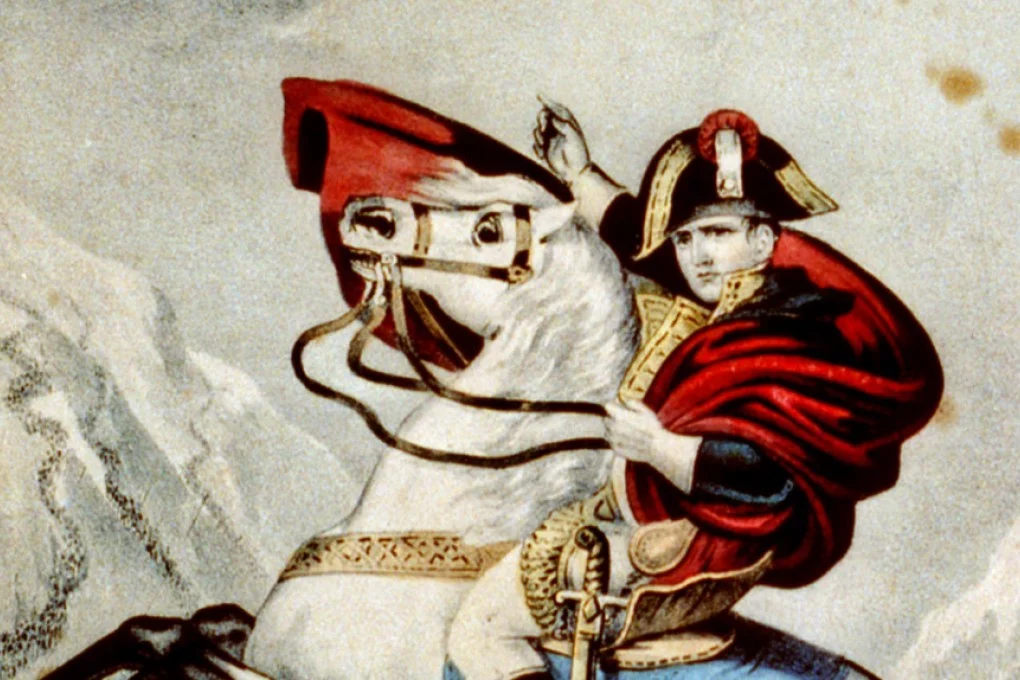
The Battle Napoleon Almost Won — and Why That Almost Isn't the Real Story
The Battle of Waterloo on June 18, 1815, is one of the most analyzed military engagements in history, and for good reason: it ended the Napoleonic era, reshaped European borders for a century, and has haunted counterfactual imagination ever since. Napoleon came within hours of a victory that might have been. Had Marshal Grouchy prevented the Prussians from reaching the battlefield, had the Imperial Guard's assault succeeded before Blücher's reinforcements arrived, had the rain of June 17 not delayed the French artillery's positioning — any of these might have turned the day.
But the standard Waterloo counterfactual begins and ends with the battle itself, as though a French victory on June 18 automatically translates into Napoleon's triumph, the coalition's collapse, and a prolonged French Empire. This dramatically overstates what a single battle could have achieved. Understanding why requires looking at the full strategic situation Napoleon faced in June 1815 — a situation in which the battle at Waterloo was not the central problem.
The Strategic Reality: Winning the Battle, Not the War
When Napoleon returned from Elba in March 1815 and launched the Hundred Days, the Seventh Coalition had already mobilized against him. The forces that met him at Waterloo — Wellington's Anglo-Allied army of approximately 68,000 and Blücher's Prussians — were not the sum of coalition strength. Austria was marshaling roughly 210,000 men in the east. Russia had another 150,000 marching westward. Additional coalition forces from German states, the Netherlands, and Spain brought the total opposing Napoleon to well over 700,000 men. Napoleon's entire available army in the Waterloo campaign numbered around 120,000.
A victory at Waterloo eliminates Wellington's army as an immediate threat and buys time. It does not eliminate Austria, Russia, or the political reality that every major European power had committed to removing Napoleon from power not as a military goal but as a precondition for European peace. The Congress of Vienna, which was finalizing Europe's post-Napoleonic settlement in parallel with the Waterloo campaign, had declared Napoleon an outlaw — a "disturber of world repose" — in March 1815. That declaration does not get rescinded because one army is defeated.
The most likely immediate outcome of a French Waterloo victory is therefore a negotiated pause rather than a permanent settlement. Napoleon, having shattered Wellington and bought himself breathing room, would seek terms. Britain, whose army has just been defeated, might be willing to negotiate a temporary peace. But the continental powers — Austria, Prussia, Russia — would continue organizing a new offensive. Napoleon would need to fight another campaign, probably in the summer or autumn of 1815, against the full weight of those forces. He had done this before, winning brilliant defensive campaigns against coalitions. But never from such a weakened base.
France in 1815: The Exhausted Empire
The France Napoleon returned to in 1815 was not the France of 1804 or even 1810. Fifteen years of near-continuous warfare had imposed enormous costs. Military deaths alone are estimated at 300,000 to 400,000 during the Napoleonic Wars, with total French deaths including disease reaching perhaps 900,000. The conscription system had been so heavily drawn upon that by 1813-1814, France was drafting teenagers and men in their forties. The economic disruption of the Continental System — Napoleon's attempt to blockade British trade — had damaged French commerce and finance. Public opinion, while initially supportive of Napoleon's return, was deeply war-weary.
Napoleon understood this. The Hundred Days was characterized by a notably more liberal Napoleon than the one who had ruled before 1814. He promulgated the Acte Additionnel, a constitutional amendment that added parliamentary checks on imperial power, explicitly because he recognized that governing France in 1815 required a different approach than the authoritarian system of the First Empire. This was not hypocrisy; it was political realism. But it also reflected a constraint. Napoleon could not simply resume the style of governance that had produced the disasters of 1812-1814. He had to work with a more independent legislature, a more skeptical public, and a military that had been depleted and partially demobilized.
Even with a Waterloo victory, Napoleon rules a France that wants peace more than glory. The political pressure on him to accept favorable terms and end the conflict would have been immense. Whether he could have resisted that pressure — given his own temperament and the looming coalition forces to the east — is one of the most interesting psychological questions in the counterfactual.
Britain's Unmovable Advantage: Command of the Seas
One structural constraint on any Napoleon victory scenario is often underappreciated: Britain's naval supremacy. The Battle of Trafalgar in October 1805 had eliminated France as a serious naval rival. For the entire period from 1805 to Napoleon's final defeat, Britain controlled the sea lanes of the Atlantic, Mediterranean, and beyond. No land victory could change this.
The practical consequences were severe and ongoing. Britain could sustain its Continental allies with subsidies almost indefinitely — the British government paid out roughly £65 million in subsidies to coalition partners over the Napoleonic Wars, a figure that reflects the enormous fiscal advantage of an economy that could trade freely while France's was blockaded. Britain could reinforce, supply, and fund the next coalition even after Waterloo. It could threaten French colonies and trade at will. It could land forces anywhere on Europe's coastline.
Napoleon's strategic vision always included an eventual reckoning with British sea power — through invasion (abandoned after Trafalgar), through economic warfare (the Continental System, which hurt France nearly as much as Britain), or through a negotiated division of spheres. A Waterloo victory gives him more leverage to negotiate with Britain. But it does not give him the ability to coerce Britain into a lasting, favorable peace. Britain's island geography and naval strength mean it can outlast any French continental hegemony. This is the constraint that, more than any coalition army, defines the ceiling of what Napoleon can achieve even in victory.
The Plausible Outcome: A Medium-Term Empire, Not an Eternal One
Working through these constraints, the most historically defensible Napoleon-wins-Waterloo scenario looks something like this: Napoleon defeats Wellington on June 18, pursues vigorously to prevent reorganization, and negotiates a temporary peace with Britain by August 1815 on terms roughly similar to the 1802 Peace of Amiens — a mutual recognition of the status quo with France dominant on the continent and Britain dominant at sea.
Austria and Russia, lacking British financial backing and facing a renewed French offensive threat, accept a peace congress in late 1815 or early 1816. Napoleon retains France's expanded borders, perhaps adding Belgium permanently. The Congress of Vienna's conservative settlement is partially undone: the German Confederation is reorganized under more French influence, the Bourbon restoration in Spain may not hold, and some of the satellite kingdoms Napoleon had established survive rather than being dismantled.
But this settlement is unstable. The underlying tensions that produced the Napoleonic Wars — between French expansionism and the conservative monarchies of Europe, between revolutionary ideals and the Old Regime — have not been resolved, only deferred. Napoleon is in his mid-40s and declining health. He died at 51 in actual history; there is no reason to expect significantly more years in this alternate. When he dies, the succession to his son Napoleon II (the King of Rome, born 1811) would be contested, the satellite states would be pulled back toward independence, and the coalition powers would see their opportunity.
The empire survives perhaps a decade longer than it did in reality. Napoleon II rules as a constitutional monarch under regency until the early 1830s, when a new coalition either forces a negotiated reduction of French power or a war that France, now without Napoleon's military genius, loses. The Napoleonic legal and administrative legacy — the Code Napoléon, the prefectural system, meritocratic institutions — survives because these were genuinely useful reforms that successive French governments and European states had already internalized.
German and Italian Nationalism: A Different Path
One of the most historically interesting dimensions of this counterfactual concerns German and Italian nationalism. In actual history, Napoleon's conquests had two paradoxical effects on German and Italian identity. First, by reorganizing the German states into the Confederation of the Rhine and installing French administration, he demonstrated that these territories could be governed as coherent units larger than the traditional patchwork of principalities. Second, by humiliating the German states and occupying them, he provoked the nationalist reaction that eventually produced German unification in 1871 under Prussian leadership.
In a Napoleon-wins scenario, the second effect is diminished. German nationalism still develops — it was already present before Napoleon — but the specific Prussian-military-revanchist flavor of post-1815 German nationalism, which was a direct response to the humiliation of Napoleonic occupation and the Wars of Liberation, is moderated. German unification, when it comes, may arrive later, through more parliamentary means, and without the specific Prussian martial culture that shaped unified Germany into the aggressive state that produced the Franco-Prussian War of 1870 and eventually the militarism of 1914.
This is genuinely significant for 20th-century history. The specific path to German unification under Bismarck, and the constitutional structure of the German Empire that resulted, was critically shaped by the humiliations and resentments of the Napoleonic period. A different 19th-century Germany — perhaps a loose confederation that unifies gradually through economic integration rather than through Prussian military victories — might not produce the particular combination of industrial power, military culture, and revanchist nationalism that made the 20th century so catastrophic.
The Napoleonic Legacy: What Survives Regardless
Whatever the military and political outcome, certain elements of the Napoleonic legacy were already irreversible by 1815. The Code Napoléon had been adopted across occupied Europe and had penetrated legal systems in ways that could not be undone by a change of government. The abolition of feudalism in French-controlled territories had transformed property relations and social structures. The administrative reforms — prefects, standardized weights and measures, a professional civil service, national education systems — had demonstrated what centralized state capacity could accomplish.
These were not French gifts to Europe; they were mostly applications of Enlightenment principles that European reformers had been advocating for decades before Napoleon. Napoleon's contribution was to implement them by force, at scale, and quickly enough that they became established facts rather than reform proposals. The Vienna settlement could restore monarchies, but it could not restore serfdom in France or the Holy Roman Empire's chaos in Germany. The political and legal modernization of Europe that Napoleon accelerated would have happened eventually without him; with him, it happened in a generation rather than a century.
In a world where Napoleon lives longer and his empire endures into the 1820s, this modernizing effect is deeper and more geographically extensive. More of Europe has longer exposure to Napoleonic institutions. More of the European elite has been educated in systems shaped by Enlightenment values. The conservative reaction of the Vienna settlement — which in actual history suppressed liberal movements throughout the 1820s and 1830s — is weaker and shorter-lived. The liberal revolutions of 1830 and 1848 may arrive earlier or with less resistance.
Historical Verdict: A Delay, Not a Transformation
The Napoleon-wins-Waterloo counterfactual, properly analyzed, produces a world that is different in timing and texture rather than fundamentally different in structure. The French Empire survives perhaps a decade or two longer. The Congress of Vienna's conservative settlement is partially undone. German and Italian unification takes a more gradual, less militaristic path. European liberalism faces less suppression in the 1820s and 1830s.
But Europe still modernizes. The nation-state still emerges as the dominant political form. Britain still dominates the seas and the early industrial economy. Russia still becomes a major continental power. The Ottoman Empire still declines. The forces driving 19th-century history — industrialization, nationalism, imperial competition, liberal constitutionalism — are not products of Napoleon's defeat. They are products of deeper structural changes in European society that his empire accelerated but did not create and could not have stopped.
What Waterloo actually decided was the specific form and timing of these changes. Napoleon's defeat gave the Vienna conservatives a generation of relative dominance that shaped the particular bitterness and violence of mid-19th-century liberal revolutions. His victory at Waterloo might have produced a more gradual, less violent transition to the modern world. Whether that is better depends on your values. But it is a genuinely different world, even if not the eternal French Empire that popular imagination sometimes envisions.
Explore This Scenario Interactively
The analysis above is our editorial interpretation. On Alternate History AI, you can shape your own Waterloo timeline — deciding how Napoleon pursues after the battle, whether he accepts a negotiated peace with Britain, and how he manages the constitutional pressures of a war-weary France. Each decision produces a different simulated outcome.
Select an interactive scenario and start exploring →
References and Further Reading
- Wikipedia: Battle of Waterloo — detailed account of the campaign and battle
- Britannica: Battle of Waterloo — scholarly summary of causes and consequences
- World History Encyclopedia: Napoleon Bonaparte — full biography and historical assessment
- Wikipedia: The Hundred Days — Napoleon's return from Elba and the campaign context
- Wikipedia: Congress of Vienna — the settlement that reshaped Europe after Napoleon's first defeat
- Shannon Selin: What if Napoleon Won at Waterloo? — historian's analysis of the counterfactual
- AlternateHistory.com: Napoleon Wins at Waterloo — community-generated timelines and debate
What if Alexander the Great lived longer? · What if the Confederates won the Civil War? · What if the Soviet Union survived?